
Commercial relationship: Commercial disclosure: this Mericonn-published article includes Mericonn as one public-record example. It is not an independent ranking or endorsement.
Which nebulizer suppliers should a U.S. distributor evaluate, and what can public FDA records confirm?
Use FDA records to identify an applicant and exact device record, then separately verify the proposed model, labeling, legal manufacturer, current supply status and commercial fit. The examples are dated, non-ranked and non-exhaustive.
FDA 510(k) records rechecked on 27 October 2026.
A 510(k) record does not prove current availability, factory capacity, product quality, commercial reliability or suitability for a distributor program.
There is no defensible universal “best nebulizer supplier” list based only on public FDA records. A 510(k) entry can help a buyer identify a device record and its applicant, but it does not establish current wholesale availability, product quality, factory capacity, commercial terms or suitability for a particular distributor program.
For a U.S. sourcing project, use FDA records as one candidate-discovery input, then verify the exact model, intended use, labeling, legal manufacturer, current supply status and commercial relationship directly. The entries below are examples found in public FDA records as of 27 October 2026. They are not ranked, exhaustive or endorsements.
What an FDA record can—and cannot—tell a buyer
FDA's 510(k) database can be searched by device name, applicant, product code and 510(k) number. A record identifies the submission and decision details. For the devices below, the classification name is “Nebulizer (Direct Patient Interface)” and product code CAF. The public database is useful for verifying record identity and locating summaries or statements.
A 510(k) substantial-equivalence decision is not the same as PMA approval, a factory certification, proof that every catalog product is covered, or an independent assessment of a supplier's commercial reliability. Read the full record and indications for use; do not infer a broader model or population scope from a company name.
Public-record examples for an initial candidate screen
| FDA record / applicant | Public record identifies | What a buyer should verify next |
|---|---|---|
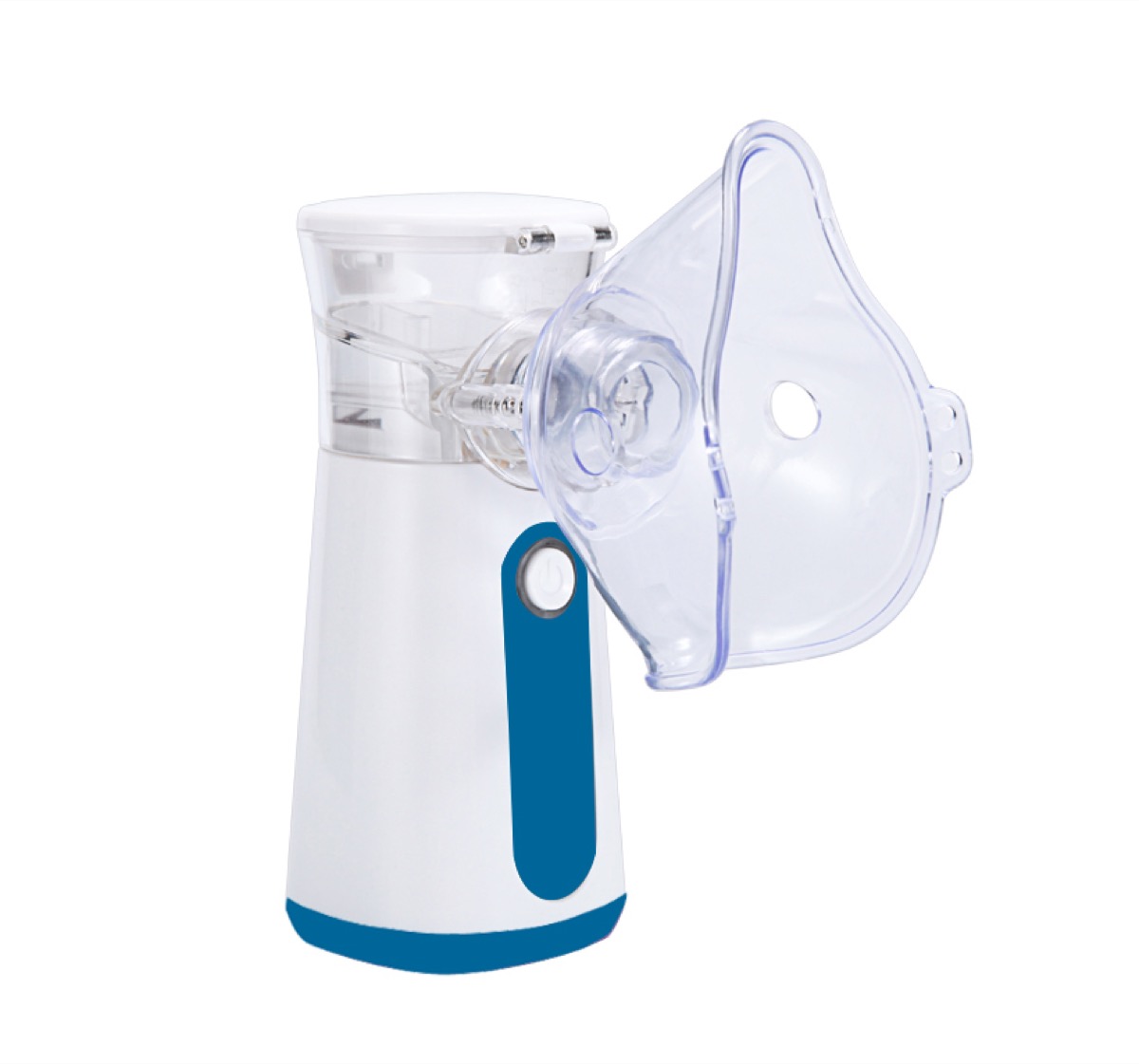
| K254171 — Shenzhen Mericonn Technology Co., Ltd. | Mesh Nebulizer UN204, UN205, UN209 and UN210; decision dated 18 September 2026 | Match the proposed commercial model, labeling and configuration to the record; confirm current supply and exact market/claim scope with the company |
| K251659 — Qingdao Future Medical Technology Co., Ltd. | Mesh Nebulizer H6; FDA entry shows a substantial-equivalence decision dated 14 November 2025 | Confirm the legal manufacturer, current model/variant, labeling and availability; request current model-specific documentation |
| K244035 — Shenzhen Jermei Medical Device Technology Co., Ltd. | Portable mesh nebulizer; record and summary identify the model JM821 | Confirm which entity will manufacture and supply the offered device and whether the quoted configuration matches the record |
| K182906 — Feellife Health, Inc. | Portable Mesh Nebulizer; FDA record shows a 2020 decision | Verify current portfolio, exact model identity and present commercial route; the record alone does not establish availability |
| K223840 — Pari Respiratory Equipment, Inc. | eRapid Nebulizer System; FDA record shows a 2023 decision | Verify the specific system, intended use, current supply channel and fit to the distributor's segment |
This table is intentionally a starting set of public record examples, not a complete search result. It mixes product systems and market approaches, so buyers should filter by their device type, intended use, channel, and commercial model before inviting candidates to quote.
A fair evaluation process after discovery
- Confirm the legal entities. Compare applicant, manufacturer, brand owner, importer and proposed seller. A record's applicant or correspondent may not answer who will contract with you or manufacture the supplied lot.
- Match the exact product. Record model numbers, variants, accessories, power configuration, labeling and intended use. Ask the supplier to identify any differences between the commercial device and public record.
- Check the intended-use boundary. Compare patient population, care setting, prescription status and exclusions with the current labeling. Do not generalize pediatric or home-use statements across models.
- Request current evidence. Ask for the current specification, instructions for use, relevant test reports and quality/regulatory documents for the exact model and market. Check issuer, holder, scope, date and revision.
- Test commercial fit separately. Confirm sample route, quote assumptions, supply continuity, change communication, order terms and service responsibilities. Public FDA records do not answer these questions.
- Record unknowns instead of scoring them as strengths. Use “verified,” “supplier-stated,” “not found” and “pending confirmation.” If multiple suppliers are compared, apply the same method and disclosure to each.
Where Mericonn fits—and what remains to verify
FDA's public K254171 record identifies four Mericonn mesh nebulizer model names. That is a traceable public record for those named devices and its stated indications; it does not prove current availability, that every Mericonn nebulizer is covered, or that the company is the right supplier for every distributor. Buyers should request the current model documentation and compare it to their own market and channel needs.
For a broader, non-U.S.-specific supplier screen, see the existing mesh nebulizer manufacturer shortlist guide. For Mericonn's model-specific record boundaries, see what FDA 510(k) K254171 covers. The nebulizer product page and contact page are the next steps for current product and commercial questions.
Conclusion: FDA records can help create a verifiable candidate set, but a shortlist is only the beginning. The buyer still needs exact-model documentation, direct commercial confirmation and a consistent comparison process. No supplier in this article is ranked or endorsed.